Industry Awards · November 23, 2026
What Crystal Award Should You Choose for a Music Competition?
Choose a crystal music award that suits the performance, competition category, event identity, and inscription. A practical guide for festivals, recitals, and music recognition.
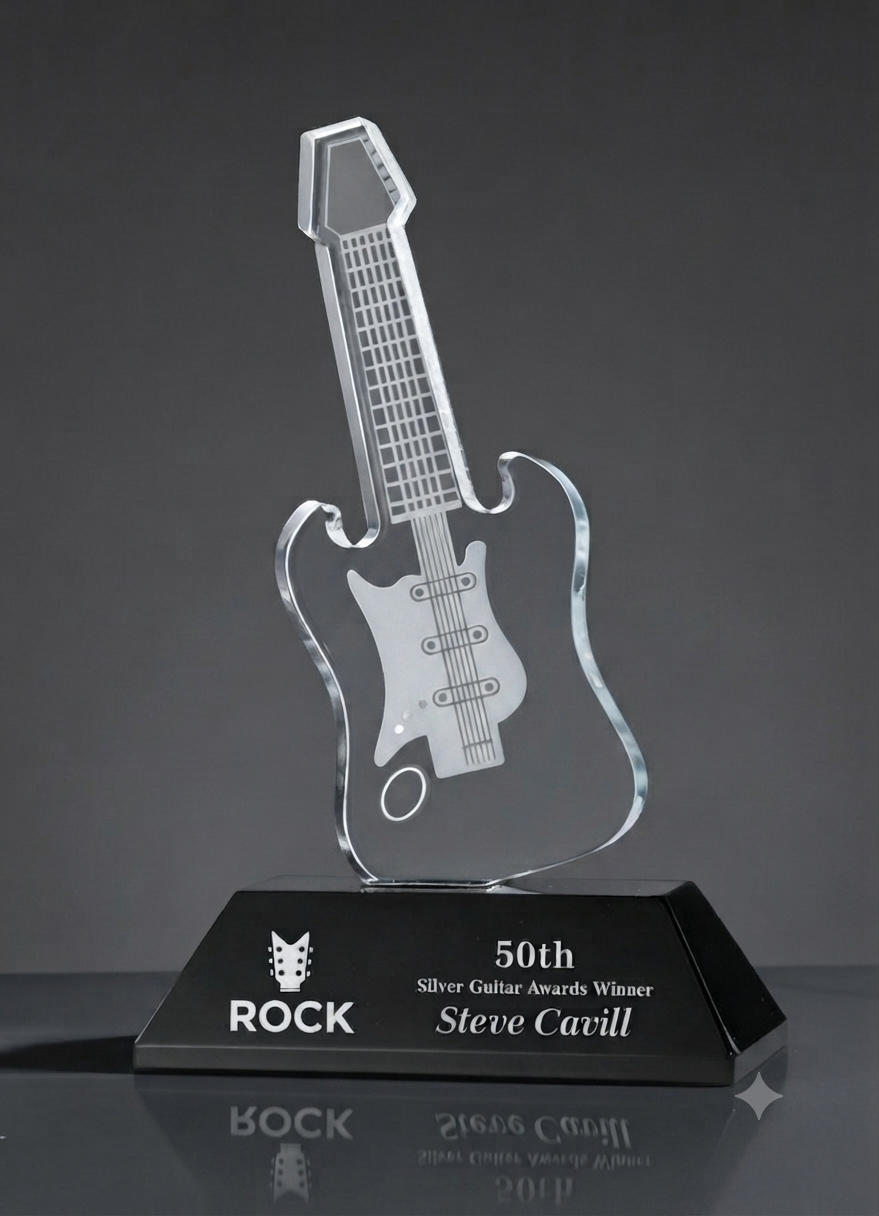
A music award should do more than mark a place in a competition. It should preserve the performance, category, event, and person or group that made the moment worth celebrating.
For a recital, festival, school competition, studio showcase, or industry recognition event, the right crystal trophy begins with the achievement—not with the shape in a catalogue. A clear award brief makes it easier to choose a design, set the inscription, and create a presentation that feels connected to the music.
Start with what the award is recognizing
Before choosing a trophy, define the contribution or result. Music events may recognize very different achievements, and the category should make the reason for the award clear.
Possible categories include:
- Overall winner: the leading result across the competition or event.
- Instrument or vocal category: a recognition for a defined discipline, instrument, voice type, or age group.
- Original composition or songwriting: recognition for a piece of original work, with the title included if it is important to the recipient.
- Ensemble or band achievement: an award for a group, not just one member.
- Emerging performer: a category for a developing musician, using criteria announced in advance.
- Outstanding interpretation or performance: recognition for a particular performance quality, where judges have defined criteria.
- Audience choice: a separate category based on a stated voting method.
- Teacher, mentor, or lifetime contribution: recognition of the person’s contribution to music education, mentorship, or a sustained career.
These are ideas, not universal award standards. Choose only categories that match the event and can be judged or explained consistently. If the award is part of a competition, publish the category and criteria before participants perform. If it is an appreciation presentation, identify the contribution you want the recipient to remember.
Match the award design to the music
The shape can make the award immediately recognizable, but it should support the achievement rather than distract from it.
Instrument-inspired shapes
A crystal guitar can be a natural fit for a guitar competition, band recognition, or an event built around guitar performance. Other instrument motifs may make sense when they are relevant to the category or recipient.
Avoid choosing an instrument shape simply because it looks attractive. If the award is for a vocalist, composer, orchestra, or music educator, a broader music symbol or a clean crystal form may be more appropriate than a specific instrument.
Music symbols and abstract designs
A musical note, treble clef, sound-wave motif, or a more abstract sculptural form can suit a general music event where recipients come from different disciplines.
A distinctive silhouette can make a trophy feel tied to the event. If the event has a visual identity, share its logo, colors, and reference artwork when discussing a design. The award does not need to reproduce every part of the event branding; one recognizable element may be enough.
A design that reflects the event itself
A festival, recital series, annual competition, or school program may want a consistent award family. One design language can unite the pieces while the inscription changes for each category or recipient.
Best Crystal Awards’ Industry Awards collection is a starting point for specialist recognition. If the event calls for a shape that is not represented by a standard design, the Custom Crystal Awards page explains how to begin a design discussion with a logo, sketch, reference object, or early concept.
Plan award levels before ordering
If your event has several categories, decide how the awards should relate visually before selecting individual pieces.
A practical approach is to create a small design system:
| Recognition level | Design approach | What should be consistent |
|---|---|---|
| Overall champion | The most prominent design in the set | Event identity and inscription style |
| Category winners | Coordinated pieces or variations | Category name and year |
| Special recognition | A distinct motif where it suits the achievement | Clear award title |
| Group or ensemble award | One shared design or individual pieces with the same group name | Group identity and wording |
The size or shape does not need to communicate the entire ranking. The award title should clearly identify the achievement. If two categories are equally important, a consistent design can reinforce that they belong to the same program.
For a recurring competition, record the design, dimensions, category names, and inscription layout. That makes it easier to plan the next event without unintentionally changing the look of the awards.
What should be engraved on a music award?
A concise inscription is easier to read and more likely to preserve the details that matter. Start with the award title and recipient, then add the event information.
A useful layout might include:
- Award title: the category or achievement.
- Recipient: the performer, composer, teacher, band, or ensemble name.
- Event: the competition, festival, recital, or presenting organization.
- Year or date: the moment being commemorated.
- Optional detail: piece title, instrument, sponsor, or a short recognition line—only if it adds meaning and fits the design.
For example, an inscription brief for a category winner could be structured as:
[Award Category]
[Recipient or Ensemble]
[Competition / Festival Name]
[Year]
This is a layout template, not copy to use without confirming the exact event and recipient details.
If the award recognizes an original composition, you may want to include the piece title. For an ensemble, use the official group name and check whether every member needs to be listed. If the full roster would overcrowd the award, consider recognizing the ensemble by name and providing the detailed roster in the event program or certificate.
Our guide to personalizing a crystal award without overcrowding the design explains how to balance the recipient, award title, logo, and supporting details.
Include event and sponsor branding thoughtfully
A music award may represent the competition organizer, venue, school, festival, presenting sponsor, or partner. Confirm which marks are required before artwork begins.
Ask yourself:
- Is the event logo more important than the sponsor logo on this piece?
- Does the sponsor need to be acknowledged on every award or only certain categories?
- Will the logo remain clear at the chosen size?
- Are the current approved logo files available?
- Does the award need a consistent layout across categories?
Peter Johansson’s artwork guidance for Best Crystal Awards asks customers to provide a true PNG or PDF logo file. Use the current approved version and label it clearly. If the artwork contains fine detail or several marks, ask the team to review how it will fit on the selected design.
For more help preparing the logo and wording, see How to Prepare Artwork and Personalization for Custom Crystal Awards and How to Choose a Crystal Award Design for Your Company Logo.
Consider where the award will be presented and displayed
The award may be handed out on stage, at a recital, in a classroom, at a festival reception, or in a studio. Think about the moment of presentation and the recipient’s likely display space.
Check the full dimensions, including the base, and ask about weight if the award will be carried by a child, performer, or presenter. A trophy intended for a stage photo may have different proportions from a compact award that will live on a piano, desk, or shelf.
Do not estimate scale from the product photograph alone. Confirm the exact measurements and personalization area for the design you are considering.
When a custom music award makes sense
A custom shape can be worth discussing when the event has a distinctive symbol, instrument, logo, or concept that a standard trophy does not express well. It may also be useful for a signature annual award that organizers want recipients to recognize immediately.
Start with a simple brief:
- What achievement is being recognized?
- Who is the recipient—an individual, group, or organization?
- What instrument, symbol, or event element should the design reflect?
- What approximate size and display setting do you have in mind?
- How many awards are required?
- What wording, logo, and date must appear?
- When do the awards need to be delivered?
Peter Johansson has more than 30 years of experience in crystal award design and production, with an emphasis on optical clarity, precision cutting, and bespoke recognition pieces. Share the concept and reference artwork early so the team can review the direction and discuss what is feasible for your project. A custom idea should be evaluated against the actual design, quantity, personalization, and timeline—not assumed to be available without review.
Plan the order around the event date
A music competition or festival often has several award categories and a fixed presentation date. Build the schedule around the time the awards need to be in hand, leaving room to inspect them and organize the presentation.
When requesting a quote, include the event date, destination, quantity, selected or preferred design, recipient details, logo, personalization requirements, and any packaging or presentation needs. Ask the supplier to confirm the schedule for the exact order, including artwork approval, production, dispatch, and transit.
For multiple awards, prepare one checked recipient list. Keep each category, recipient or ensemble, title, year, and exact wording on a separate row. Assign one person to consolidate corrections and approve the final proof.
Compare quotations on the same scope: design, dimensions, material, personalization, artwork, packaging, shipping, and timeline. For a broader recognition-award buying framework, see The Corporate Recognition Awards Buying Guide.
Music award ordering checklist
Before finalizing your order, confirm:
- The award categories and judging criteria are defined.
- The design reflects the event, discipline, or recipient.
- The recipient or ensemble names are checked and final.
- The award title, event name, and year are correct.
- Sponsor and organizer logos are approved and supplied.
- The inscription fits the selected design and remains readable.
- Dimensions, weight, and display requirements are confirmed.
- Quantity and any individual variations are clear.
- The proof has been reviewed by one authorized approver.
- Production and delivery timing are confirmed for the required date.
Helpful answers
Frequently asked questions
What makes a good music competition trophy?
Choose a design that reflects the event or discipline, names the achievement clearly, and gives the recipient a meaningful keepsake. Confirm the category and inscription before ordering.
Should every category have a different award?
Not necessarily. A coordinated design family can help the event feel consistent. Use the award title and inscription to distinguish categories, and vary the design only when it supports the recognition.
Can a crystal award be shaped like an instrument?
Instrument-inspired shapes can be a design direction for music recognition. Share the instrument, reference image, approximate dimensions, quantity, and required date with the supplier to discuss the options for a specific design.
What should be engraved on a music award?
Usually the category or achievement, recipient or group name, event, and year. Include a piece title, sponsor, or additional message only if it is accurate and fits the available area.
How early should music awards be ordered?
There is no single lead time for every award. Timing depends on the selected design, quantity, personalization, proof approval, production, and delivery destination. Confirm the schedule for your specific order before committing to the event date.
Made for meaningful recognition
Ready to make an achievement memorable?
Share your event, design direction and timeline. Our team can help you explore a fitting crystal award.
Discuss your award project →