Employee Appreciation · November 15, 2026
How to Choose Employee Appreciation Awards That Feel Personal
A practical guide to matching an employee appreciation award to the contribution, choosing a design that fits the message, and preparing personalization that feels specific rather than generic.
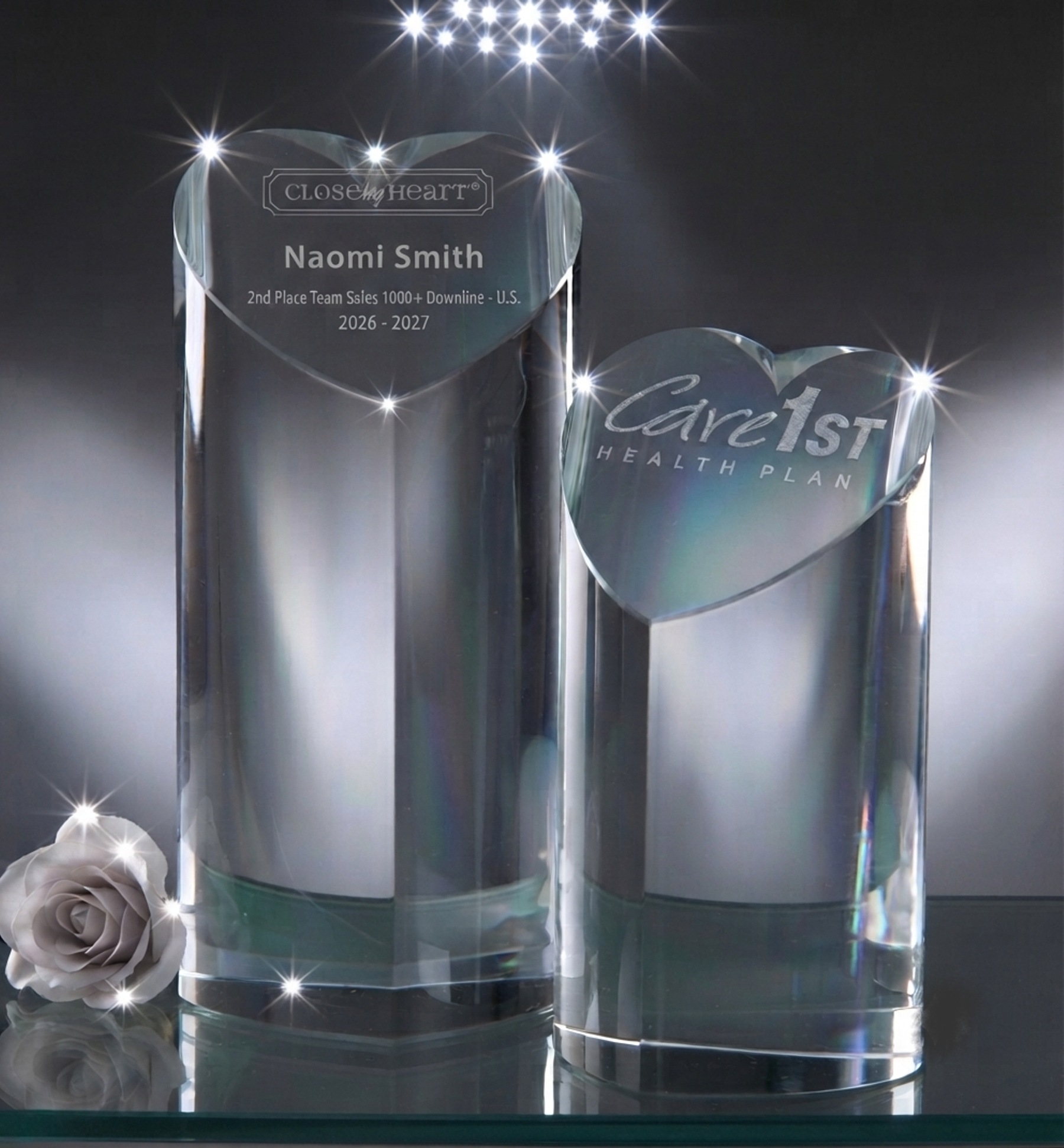
An employee appreciation award feels personal when it names what someone did and why it mattered. The shape may catch attention, but the connection between the contribution, the message, and the person receiving it is what gives the award its meaning.
The easiest way to choose well is to begin with the recognition itself—not with a product catalogue. Identify the contribution, decide what the recipient should remember, and then choose a design and inscription that support that message.
At Best Crystal Awards, our Employee Appreciation Awards page and related crystal collections offer several design directions for recognizing individual contributions, teamwork, and shared achievements.
1. Start with the contribution, not a generic award title
Before comparing shapes, write down the specific action or behavior you want to recognize. "Outstanding employee" may describe the category, but it does not explain what made the person's work valuable.
A useful starting point is to identify the kind of contribution:
- Everyday contribution: Someone consistently improves how work gets done, follows through on important responsibilities, or makes it easier for colleagues to succeed.
- Teamwork: A group completes a demanding project, supports another department, or achieves an outcome through coordinated effort.
- Values in action: An employee demonstrates a company value through a specific example of mentorship, customer care, initiative, or dependable support.
- Improvement and achievement: Someone solves a recurring problem, improves a process, or delivers a result that deserves to be remembered.
The more clearly you can describe the contribution, the easier it becomes to choose a suitable design and write an inscription that does not sound like a template.
Keep employee appreciation separate from service-anniversary recognition. A colleague can deserve appreciation for a contribution made this week, even if they have not reached a formal employment milestone. For broader milestone and leadership recognition, see our Corporate Recognition Awards page.
2. Choose a design whose symbolism supports the message
A crystal shape can reinforce the meaning of an award, but it should not replace the message. Start with the occasion and then consider whether a familiar symbol helps communicate it.
Heart designs for appreciation and care
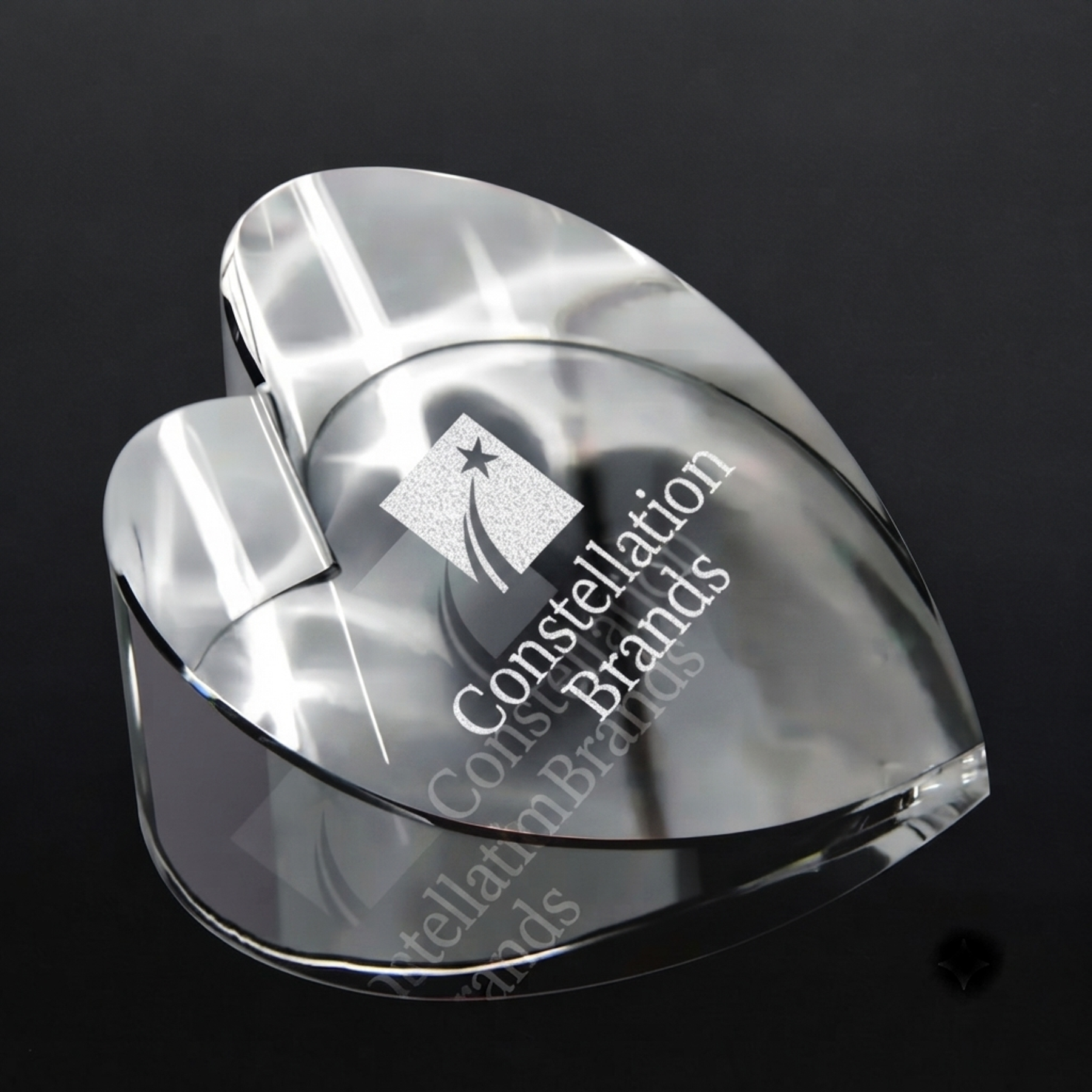
A heart motif can suit gratitude, support, caregiving, and a personal expression of thanks. Our Heart & Health collection includes heart-shaped crystal designs presented for healthcare recognition, employee appreciation, and meaningful keepsakes.
Star designs for achievement and distinction
A star can be a natural direction when the recognition centers on a clear achievement, distinction, or performance milestone. The Stars and Hearts collection brings these motifs together, which can help when a program recognizes more than one kind of contribution.
Globe designs for work across teams and regions
If the achievement involves collaboration across offices, regions, or international teams, a globe motif may help express that shared connection. Explore the Globe Design collection when the recognition is tied to a distributed team or a wider organizational milestone.
These are starting points, not fixed rules. The right design depends on the exact product, the recipient, the occasion, and the space available for personalization. Review the individual product details and confirm its dimensions and customization options before deciding.
3. Decide whether the recognition is for one person or a team
An individual award can name the recipient and describe their contribution directly. A team award needs to recognize the shared result without making the inscription so broad that nobody can see what the group accomplished.
For an individual award, consider:
- The recipient's preferred name and correct title.
- The specific action or achievement being recognized.
- The difference that contribution made to colleagues, customers, or a project.
- The date or program name, if it adds useful context.
For a team award, identify the team or project clearly and describe the shared outcome. If each person will receive an individual piece, decide whether the design should remain consistent while the names and messages vary.
A coordinated design can make a group presentation feel unified. Different designs may be appropriate when the recognition categories are genuinely different, but avoid creating distinctions that the program cannot explain clearly.
Before requesting a quote, confirm the number of awards and whether each one needs a separate name or inscription. That simple decision helps the team understand the scope of the project.
4. Write an inscription that proves you noticed
The inscription should make the reason for recognition clear. A recipient's name is important, but a name by itself does not explain why the award was presented.
A useful structure is:
- Recipient's name.
- The contribution or achievement.
- A short line about its impact or the appreciation being expressed.
- Organization, program, or date where relevant.
For example, a concise layout could follow this pattern:
[Recipient Name]
In appreciation of [specific contribution]
For the positive difference made to [team, project, or customers]
[Organization] · [Year]
Use the words that accurately describe the contribution. Avoid broad praise that could be copied onto every award in the program. A short, specific line is usually more meaningful and easier to read than a long paragraph.
If several recipients are being recognized, collect the final wording in one clearly labelled list. Check spelling, capitalization, titles, dates, and the relationship between each name and its message before submitting the information.
5. Keep the design and inscription in balance
A personal award does not need to carry every detail of the achievement. Too much text can make an inscription difficult to read and can compete with the crystal's shape.
When comparing products, consider:
- Engraving space: Is there room for the recipient's name, the achievement, and any required logo?
- Readability: Will the most important words remain clear at the finished size?
- Visual hierarchy: Can the recipient's name and reason for recognition be understood quickly?
- Display setting: Will the award fit comfortably on the intended desk, shelf, or display?
- Consistency: If you are ordering several pieces, will the same design accommodate every inscription?
A company logo can help connect the award to the organization, but it should support rather than overwhelm the recognition message. If you need a design developed around a particular brand or concept, explore Custom Crystal Awards.
6. Prepare one complete brief before artwork begins
Once you have a design direction, gather the information the supplier needs to review the project. A clear brief is especially useful when a group of awards requires different recipient names or messages.
Include:
- The occasion and contribution being recognized.
- The preferred collection or product, if known.
- The quantity and whether inscriptions vary.
- The approved recipient names, titles, and wording.
- The company logo, if it should appear on the award.
- The presentation date and delivery destination.
Best Crystal Awards asks customers to provide a true PNG or PDF logo file. A screenshot or an image copied from a webpage may not be the original artwork file needed for the design process.
Peter Johansson's practical guidance is to settle the wording carefully before the artwork is prepared. One text change is accepted; a second text change incurs a $90 art charge. Digital proofs usually take about one day to prepare, so allow time for the appropriate person to review the layout and return a clear approval.
For timing, Peter's standard planning guidance is approximately two weeks of production after design and proof approval, followed by around one week of FedEx Air transit. Some complex pieces may require approximately three weeks of production. These are estimates, not delivery guarantees; confirm the schedule for the exact design, quantity, and destination before placing an order.
For a closer look at logo files, inscription checks, and proof review, read How to Prepare Artwork and Personalization for Custom Crystal Awards. If your event date is close, our guide to common rush-order delays explains why artwork, approvals, design requirements, and shipping all need to be considered.
7. Plan how the award will be presented
The award is only one part of the recognition. Decide who will present it and what they should say about the contribution.
A short introduction that names the achievement helps the recipient understand why the award matters. For a team presentation, mention the shared result and the behaviors that made it possible. If the award is being sent to someone who cannot attend, include a personal note that explains the same context.
The presentation should match the recognition. It does not need to be elaborate; it needs to make the contribution visible and give the recipient a clear reason to keep the award.
Employee appreciation award checklist
Before confirming your selection, make sure you can answer these questions:
- What specific contribution or achievement are we recognizing?
- Is the award for one person or a team?
- Does the design's symbolism fit the message?
- Will the recipient's name and inscription be clear at the finished size?
- Have we confirmed the quantity and any individual text variations?
- Is the logo file a true PNG or PDF?
- Has one person been assigned to review and approve the digital proof?
- Have we shared the presentation date and delivery destination?
If these details are ready, you can compare designs with a much clearer idea of what the award needs to communicate.
Helpful answers
Frequently asked questions
What should an employee appreciation award say?
Name the recipient and the specific contribution being recognized. Add a short explanation of its impact, followed by the organization or date if useful. Avoid relying on a generic phrase that could appear on every award.
Should I choose a heart or a star crystal award?
Consider the message. A heart may suit appreciation, care, or gratitude, while a star can suit achievement and distinction. The selected product still needs to provide the right proportions and engraving space for your inscription.
Can one award design work for an entire team?
It can, provided the design suits the occasion and has enough room for the required wording. Confirm the quantity, recipient list, and whether each piece needs a different inscription before requesting a quote.
What logo file should I provide?
Best Crystal Awards asks for a true PNG or PDF logo file. Provide the original file where possible and identify the correct logo version before artwork begins.
How long does an employee appreciation crystal award take?
Peter Johansson's standard planning guidance is about two weeks of production after proof approval, plus around one week of FedEx Air transit. Digital proofs usually take about one day, and some complex pieces may need three weeks of production. These are estimates; ask the team to confirm timing for your specific design and destination.
Made for meaningful recognition
Ready to make an achievement memorable?
Share your event, design direction and timeline. Our team can help you explore a fitting crystal award.
Discuss your award project →