Custom Crystal Awards · November 25, 2026
Crystal vs. Acrylic Awards: Which Is Right for Your Recognition Program?
Compare crystal and acrylic awards by presentation, handling, customization, quantity, and total order requirements. Choose the material that fits the recognition moment—not just the product photo.
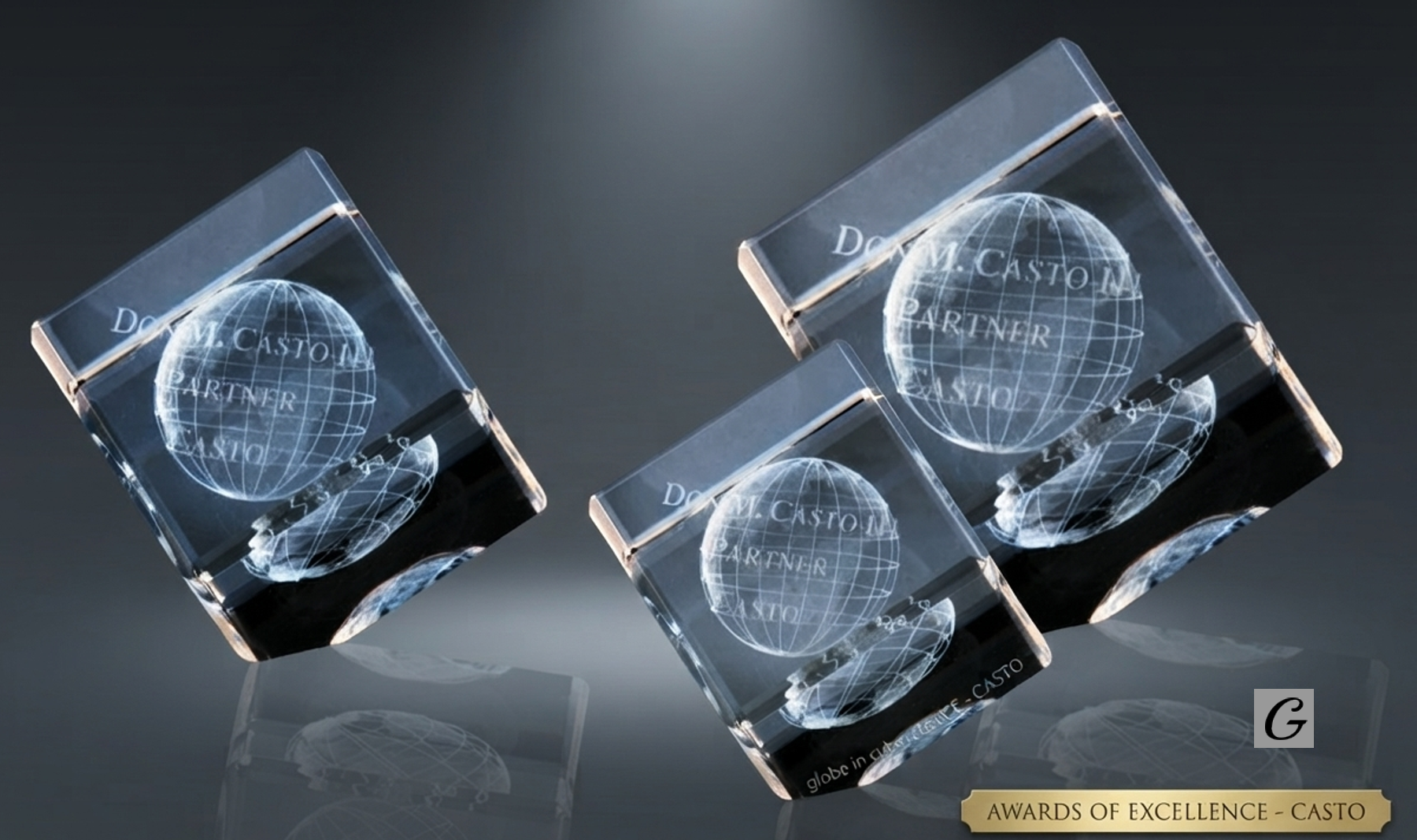
A crystal award can make a major achievement feel like a milestone. An acrylic award can be a practical choice when a recognition program needs more pieces, lighter handling, or a highly branded shape. Neither material is automatically right for every event.
The useful question is not simply which material looks more expensive. It is: what does this award need to do for the recipient, the event, and the organization buying it?
This guide compares the decisions that matter before you request a quote: how the award will be presented, where it will be displayed, how many you need, what the design must communicate, and how the pieces will travel.
The short answer
Choose crystal when the award is intended to be a substantial presentation piece for a significant achievement, executive milestone, leadership honor, or recipient who will display it for years.
Consider acrylic when the program needs a lighter material, a larger quantity, a highly shaped or color-led design, or more forgiving handling across events and locations.
Those are starting points, not rules. The final result depends on the exact material, dimensions, finish, decoration method, packaging, and supplier. Compare actual specifications rather than relying on the words crystal or acrylic alone.
Crystal and acrylic are different materials
In the awards market, crystal usually refers to a glass-based material selected for its clarity, weight, and light-catching appearance. Suppliers may use different terms and specifications, so ask what exact material is being offered. Do not assume that every product described as crystal has the same composition or optical properties.
Acrylic is a transparent thermoplastic, commonly made from polymethyl methacrylate (PMMA). It can resemble glass in a product photograph, but it is a different material with different handling and fabrication characteristics. Manufacturer information for cast ACRYLITE acrylic, for example, describes it as a lightweight, rigid thermoplastic with greater breakage resistance than standard glass. That is a product-specific technical statement, not a guarantee for every acrylic grade or award design.
The distinction matters because a photograph can hide the difference in weight, edge finish, surface behavior, and how the piece feels when it is handed to a recipient.
Crystal vs. acrylic at a glance
| Buyer consideration | Crystal award | Acrylic award |
|---|---|---|
| Presentation | Often chosen for a formal, substantial keepsake | Can create a clean, contemporary presentation |
| Weight | Usually heavier; consider the recipient and display surface | Generally lighter and easier to move in quantity |
| Handling | Needs careful handling because glass-based pieces can chip or break | Often more impact-tolerant than standard glass, but can still scratch or crack |
| Visual character | Polished facets and optical depth can make light part of the design | Clear, colored, layered, or printed treatments can support a modern branded look |
| Shape and branding | Works well when the form, engraving, and message are the focus | Often offers flexibility for shaped silhouettes and color-heavy artwork |
| Program scale | A strong fit for selected, high-significance honors | Worth considering for frequent or larger-volume programs |
| Cost | Often carries a higher material and finishing cost; confirm the full quote | Often more economical, but design, thickness, and decoration still affect price |
Use the table to decide what to investigate—not as a substitute for the specifications of the exact award.
When crystal is the better fit
1. The recognition is a major milestone
A retirement tribute, lifetime achievement, executive honor, founder recognition, or top annual award may call for a presentation piece that feels distinct from everyday recognition. Crystal can suit that role when its weight, clarity, and polished finish reinforce the significance of the occasion.
The point is not to make the award large for its own sake. It is to choose a form that feels appropriate to the contribution being recognized.
2. The recipient will display the award
Think about the award after the ceremony. Will it sit on a desk, shelf, reception counter, or display cabinet? A crystal design can work particularly well when the recipient has a stable place to display it and the piece is intended to remain visible.
Check the actual footprint and weight before choosing. Our crystal award size guide explains why height alone is not enough when planning a display piece.
3. The design should let the material do the work
If the message is concise and the award's shape is the main visual feature, crystal can create a refined result without relying on many colors or graphic elements. A clear silhouette, considered engraving, and well-spaced personalization may be all the design needs.
For a company logo or a more distinctive form, see our guide to choosing a custom crystal award design around your logo.
When acrylic may be the more practical choice
1. You need a large number of awards
A recurring recognition program may require dozens or hundreds of pieces across departments, locations, or events. In that situation, weight, budget, storage, and distribution can matter as much as appearance.
Acrylic is worth evaluating when the program needs a lighter award or a more controlled per-recipient budget. Ask for a quote based on the exact quantity and decoration requirements. Do not assume that every acrylic design will be cheaper than every crystal design.
2. The award needs to travel frequently
Consider how the pieces will be packed, moved, handed out, and carried home. Acrylic can be more forgiving than glass-based materials during ordinary handling, but it is not indestructible. It can scratch, crack, or be damaged by unsuitable cleaners.
If awards are being shipped to several offices or carried between venues, ask the supplier how the specific design is protected in transit. Material alone does not determine whether a shipment arrives safely.
3. The design depends on color or a custom silhouette
Some acrylic awards support broad color treatments, layered constructions, and shapes that are useful for campaign-led or highly branded recognition. If the visual brief depends on a precise color palette, an unusual outline, or a large graphic, ask which material and decoration method can reproduce it most clearly.
Do not assume that every decoration method works on every product. Ask to see an example made with the same material and a similar design.
A useful option: use both materials in one recognition program
Some organizations do not need to choose one material for every award. A tiered program can use acrylic for frequent, recurring recognition and reserve crystal for an annual top honor, executive milestone, or exceptional contribution.
This approach can make the distinction between award levels visible without relying only on size. It also gives the organization a consistent design system: related typography, colors, award titles, and presentation language can connect the pieces even when the materials differ.
Before adopting a mixed program, check that the two suppliers or product lines can maintain a consistent visual identity. If the awards look unrelated, recipients may interpret the difference as a change in quality rather than a planned recognition hierarchy.
Seven questions to ask before choosing
Use these questions with the actual product or supplier you are considering:
- What is the exact material? Ask whether the product is optical crystal, another glass specification, or acrylic PMMA. Request the product specification rather than relying on a broad label.
- What are the real dimensions and weight? Check height, width, depth, base size, and total weight. These details affect display, handling, and delivery.
- How will the design be personalized? Ask which decoration methods are available for that exact model and whether they suit your logo, text, photograph, or color requirements.
- Can I review a comparable finished example? A real product photograph can reveal edge finish, clarity, color, and engraving appearance more clearly than a generic mockup.
- How will the award be packaged? Ask how the specific piece is protected and whether individual presentation packaging is included.
- What happens if a piece is damaged in transit? Understand the supplier's inspection, reporting, and resolution process before ordering.
- What is included in the complete quote? Compare the exact model, dimensions, quantity, personalization, artwork work, packaging, shipping, and any other charges.
Our crystal award quote comparison checklist helps you compare suppliers on the same scope instead of comparing unit prices that may include different services.
A simple decision guide
Use this quick filter before you shortlist designs:
- One significant award for a major milestone: Start by considering crystal.
- A recurring program with many recipients: Compare acrylic as well as crystal, using the total program budget and distribution plan.
- A design led by color, a campaign graphic, or an unusual silhouette: Ask suppliers to show which material and decoration method will reproduce the artwork best.
- A piece intended for a permanent office or reception display: Consider crystal if the recipient's display setting and handling requirements suit it.
- Awards that travel between venues or ship to many locations: Give weight, packaging, and impact tolerance more attention before choosing.
If the answer is still unclear, request comparable options using the same brief. A fair comparison needs the same recipient purpose, approximate dimensions, personalization, quantity, packaging, and destination.
Helpful answers
Frequently asked questions
Are crystal awards better than acrylic awards?
Neither is universally better. Crystal can be a strong choice for a formal, substantial keepsake. Acrylic can be more practical for larger programs, lighter handling, or designs that depend on color and shape flexibility. Choose according to the award's purpose and use.
Are acrylic awards real glass?
No. Acrylic is a transparent plastic, commonly PMMA. It can look similar to glass in photographs, but it is a different material. Ask the supplier to identify the exact material used in the award.
Do crystal awards break more easily than acrylic?
Glass-based crystal can chip or break if dropped or struck. Acrylic is generally more impact-tolerant than standard glass, but it can still be scratched, cracked, or damaged. Packaging and handling matter for both.
Which material is better for a large employee recognition program?
Acrylic is worth comparing when the program needs many awards, frequent distribution, or a tightly managed per-recipient budget. Crystal may still be appropriate for selected top-tier honors. Some programs use both materials for different recognition levels.
Can both materials be personalized with a company logo?
Many awards in both materials can be personalized, but the available methods depend on the product. Ask the supplier which process is suitable for your exact logo and request a proof or comparable finished example before approving the order.
Is crystal always more expensive?
Not necessarily in every product comparison. Material, dimensions, shape, finish, personalization, quantity, packaging, and delivery all affect the final price. Compare complete quotes for equivalent specifications.
Made for meaningful recognition
Ready to make an achievement memorable?
Share your event, design direction and timeline. Our team can help you explore a fitting crystal award.
Discuss your award project →